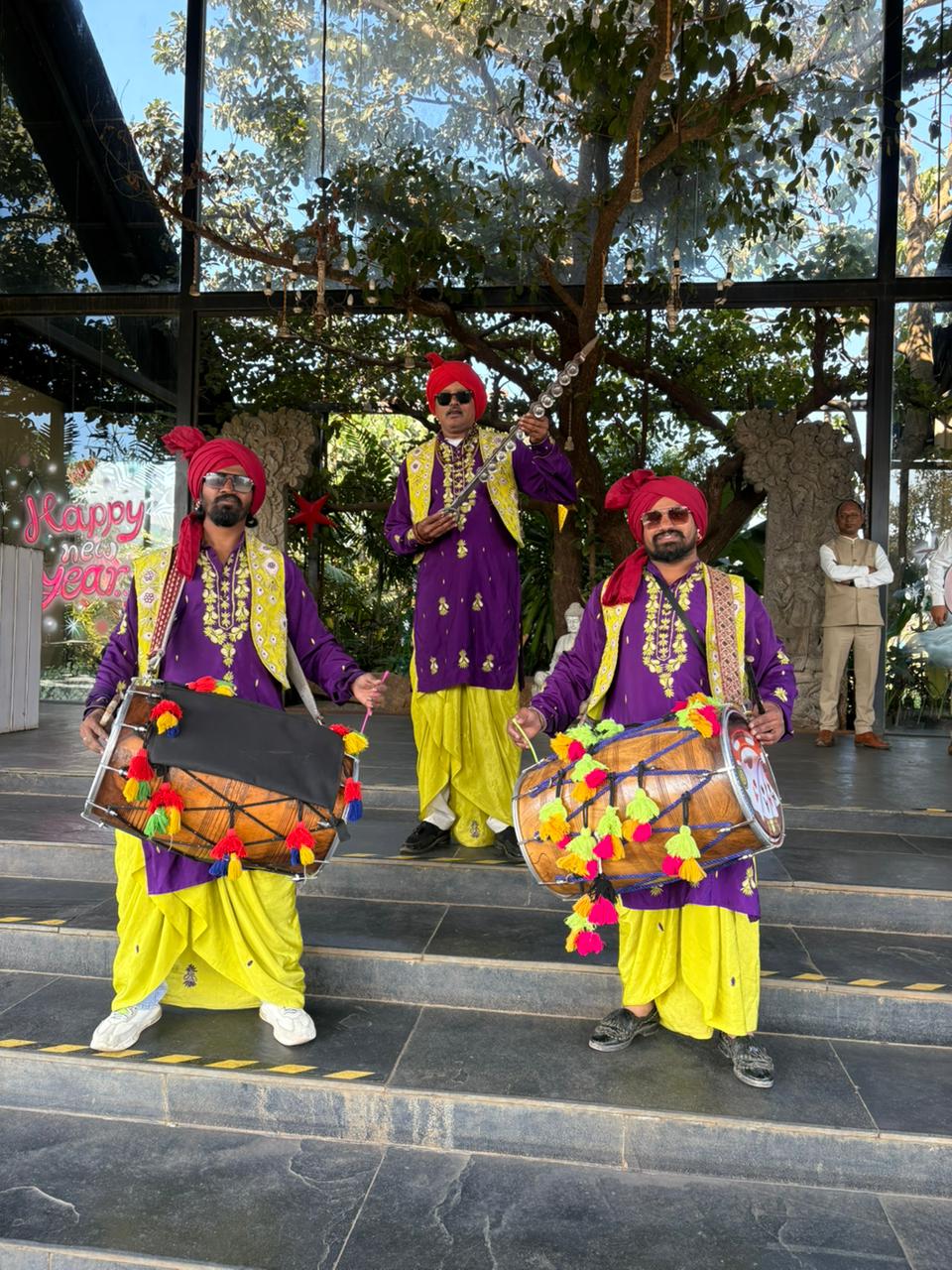
The Punjabi dhol is a traditional double-headed percussion instrument that holds a central place in the cultural and musical heritage of Punjab. Renowned for its powerful and energetic sound, the dhol is commonly performed during festivals, weddings, cultural celebrations, and folk performances. It is especially associated with traditional dance forms such as Bhangra and Giddha, where its rhythmic beats create a vibrant and celebratory atmosphere.
The instrument features a large, barrel-shaped wooden body with both ends covered in stretched goatskin. It is played using two distinct wooden sticks: a heavier stick, known as the dagga, which produces deep bass tones, and a lighter stick, called the tipper, used to create sharp, high-pitched beats. Together, these elements produce the dynamic rhythms that make the Punjabi dhol unique and instantly recognizable.
Beyond its musical significance, the dhol symbolizes joy, unity, and cultural pride, making it an enduring icon of Punjabi tradition and festivity.